
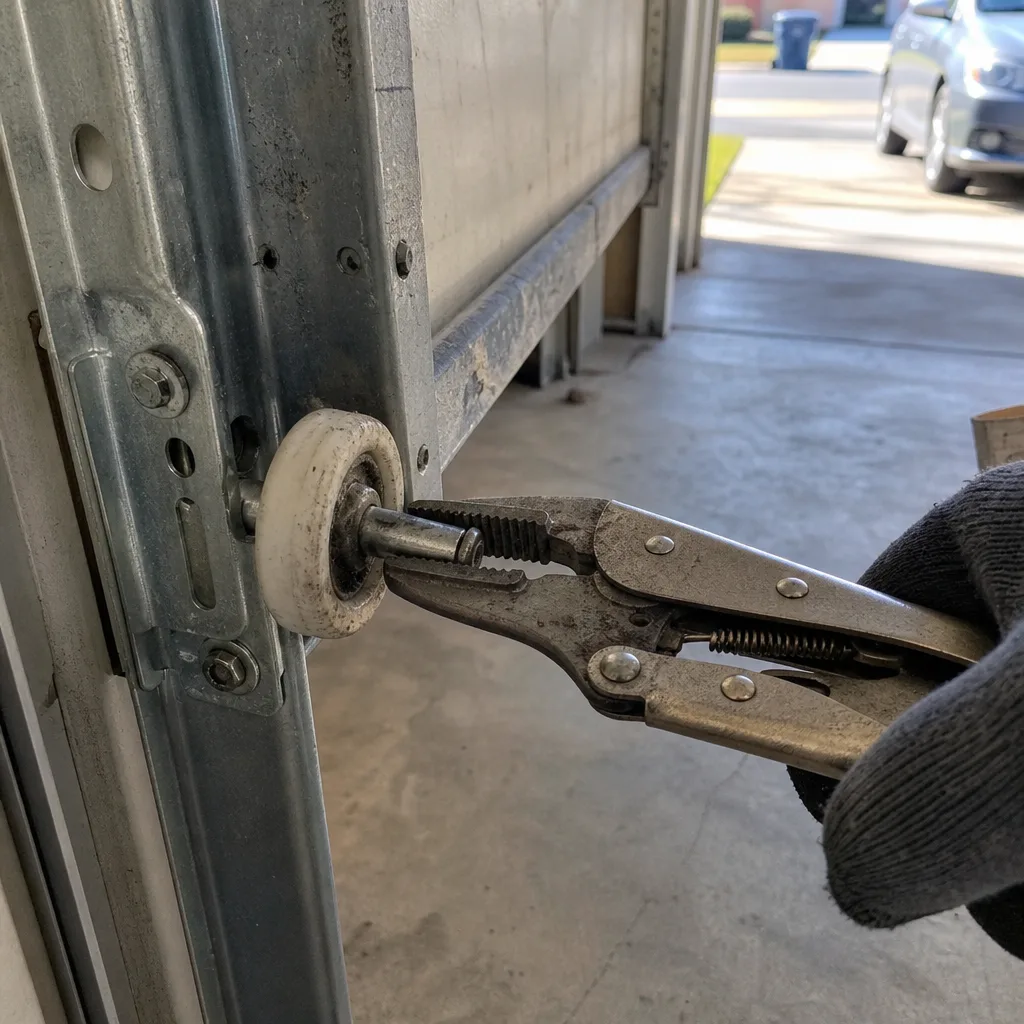
Last updated November 15, 2026
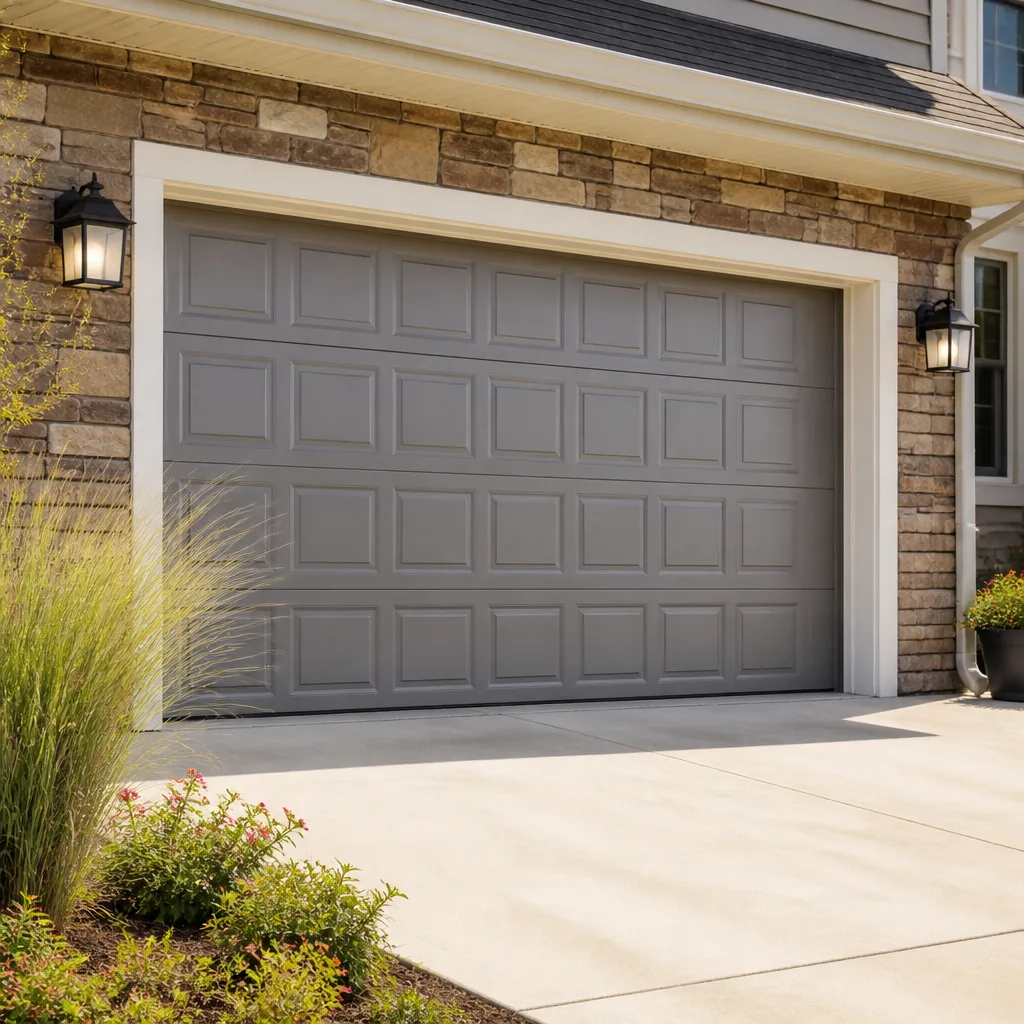 Raised-panel steel
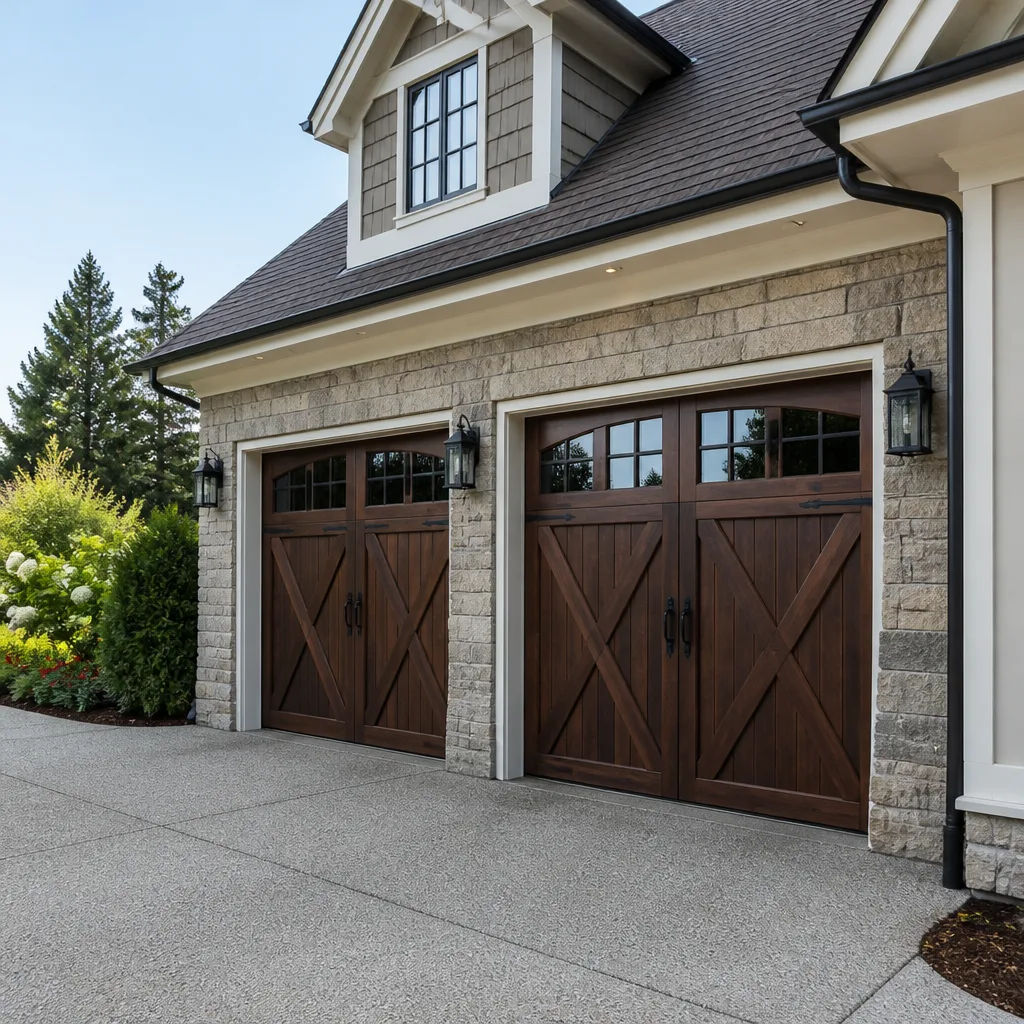 Carriage house
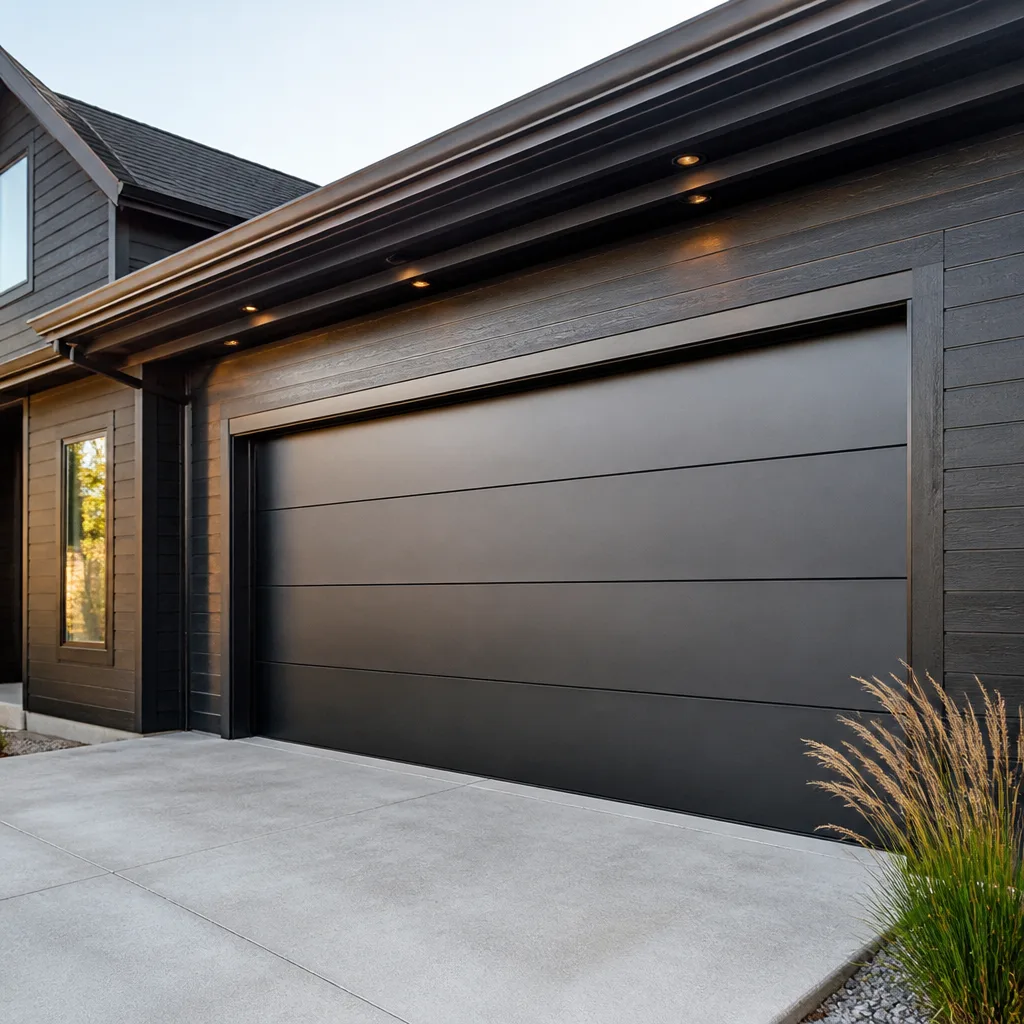 Modern flush
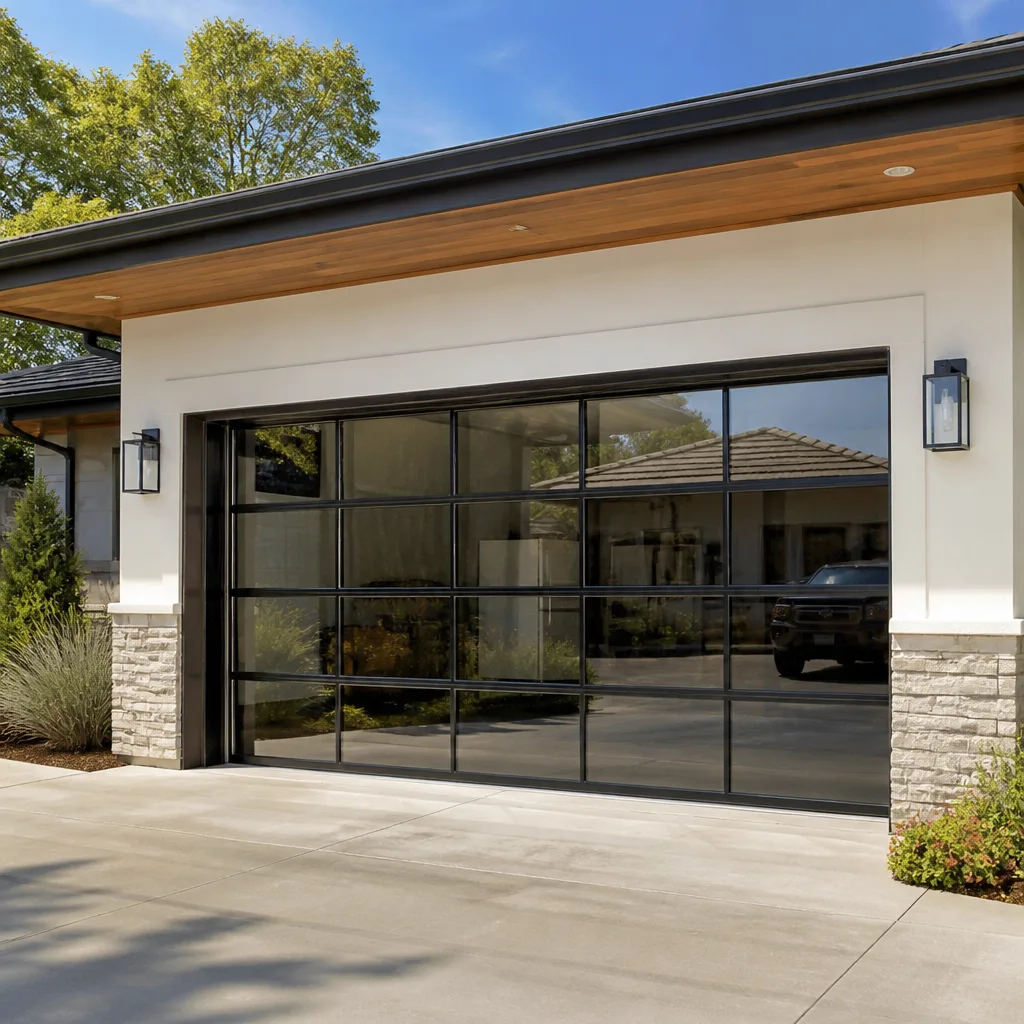 Full-view glass
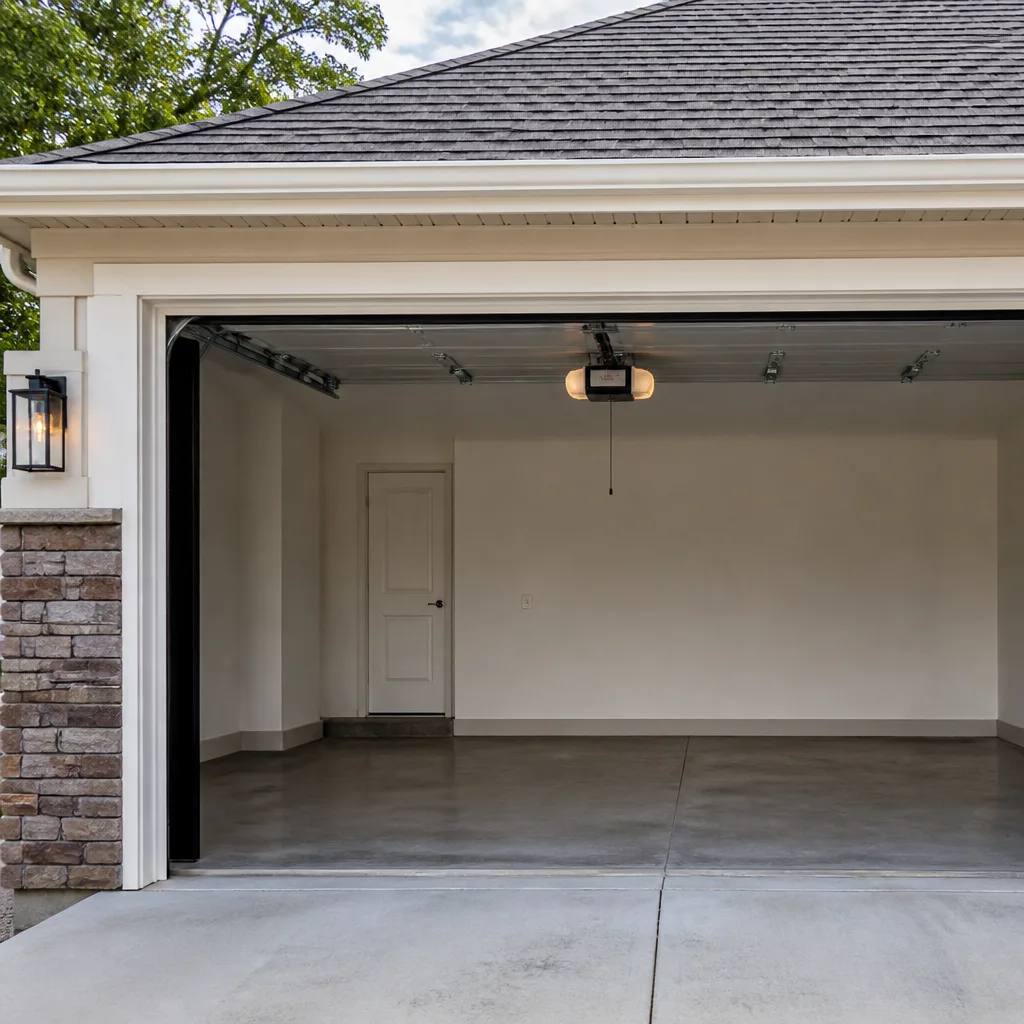 LiftMaster openers
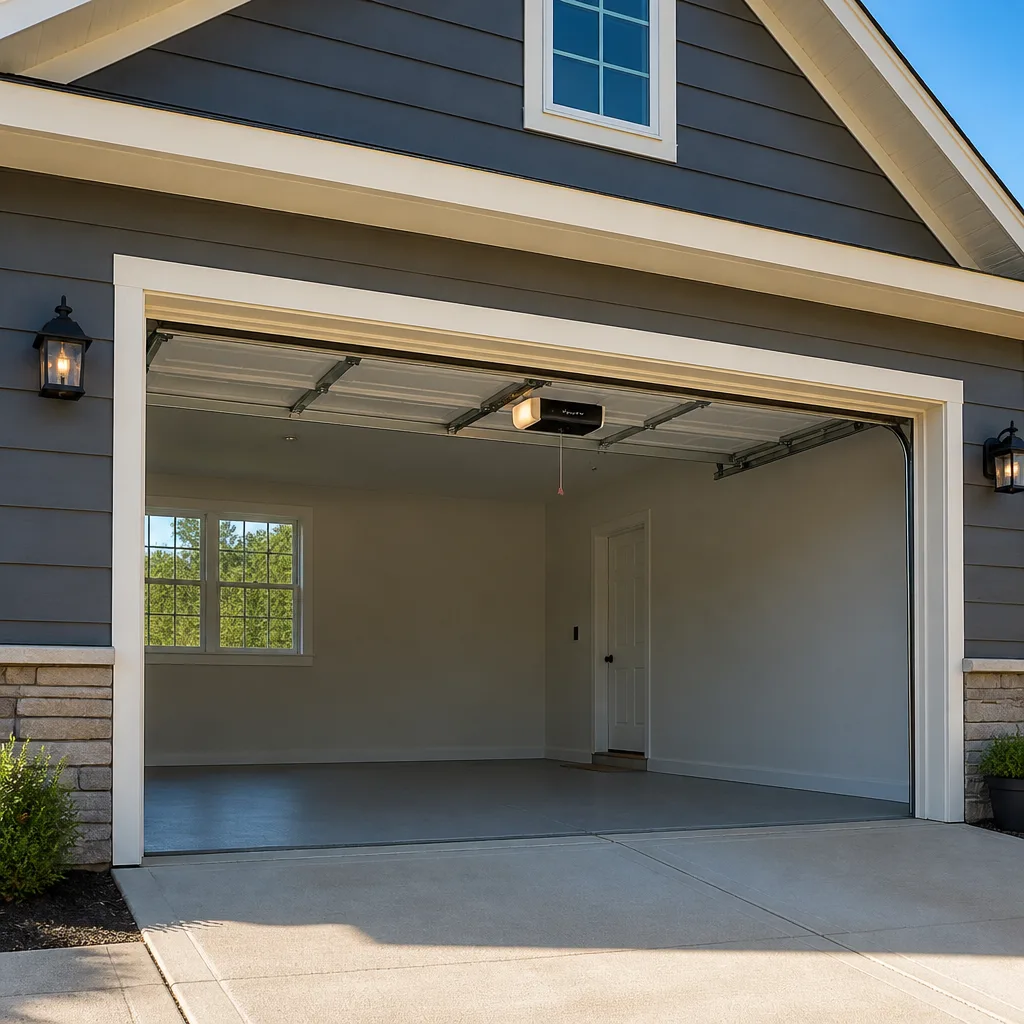 Chamberlain openers
Full 25-point door and opener safety check with every visit - springs, cables, rollers, tracks, and your LiftMaster or Chamberlain opener included
You get a price before we start. It does not change when the pro arrives.
Get your free estimateGarage Door Repair Troubleshooting in Montgomery: Common Problems and How to Fix Them
Your garage door is telling you exactly what’s wrong. Most homeowners just don’t know which sounds to listen for, or what an uneven lift versus a mid-travel reversal actually means. Here’s the part almost nobody explains: nearly every failure traces back to one of four root causes – spring tension, track alignment, opener signal, or weather seal failure. Figure out which category you’re in and you eliminate most of the guesswork before you call anyone. In this guide, we’ll walk you through how to read those symptoms the way a technician does, which repairs are safe to handle yourself, which ones aren’t, and how to document a problem so you get an accurate quote walking in the door. If you’re searching for help with garage door repair in Montgomery, this is the place to start.
Quick Answer
Most garage door problems in Montgomery fall into four buckets: broken springs or cables (mechanical), misaligned tracks and worn rollers (mechanical), opener signal and sensor faults (electrical), or a failing weather seal (a slow, seasonal issue). Run a manual-open test to tell mechanical from electrical. If the door is heavy or won’t stay up when you lift it by hand, it’s mechanical and needs a trained technician. If the door moves freely by hand but won’t run on the opener, it’s electrical and often simpler than it looks.
Styles & brands we work with
- Raised-panel steel
- Carriage house
- Modern flush
- Full-view glass
- LiftMaster openers
- Chamberlain openers
Table of Contents
- Is It Mechanical or Electrical? The Manual-Open Test
- Three Symptoms That Point to Three Different Problems
- How Montgomery Humidity and Heat Create Seasonal Failure Patterns
- What’s Safe to Fix Yourself and What Isn’t
- Springs, Cables, and Rollers: The Mechanical Piece
- Opener Signals, Sensors, and Wiring
- Weather Seals and the Slow Leak of Efficiency
- How to Document a Problem Before You Call
Is It Mechanical or Electrical? The Manual-Open Test
The single fastest way to split a garage door problem in half is a manual-open test. You don’t need tools. You need five minutes, your own two hands, and a clear head about what a healthy door is supposed to feel like.
Start by pulling the red emergency release cord hanging from the opener rail. That disconnects the door from the operator and puts it fully in your control. Then lift the door by the bottom handle. A door with healthy springs feels light – you can raise it with one hand on most single-car doors and both hands on a double – and it should stay put at the halfway point when you let go. Lower it slowly and it should track smoothly down without slamming.
Here’s how to read what you feel:
- Door is very heavy and drops when you lift it: Springs or cables. Mechanical.
- Door binds or grinds on one side while lifting: Track alignment or a worn roller. Mechanical.
- Door lifts easily but the opener won’t move it: Opener, sensor, remote, or wiring. Electrical.
- Door lifts fine but the opener reverses mid-travel: Usually a sensor or a limit/travel setting on the opener. Electrical, but check the track too.
- Door stays up but the opener runs and the chain or belt doesn’t move: A stripped gear or a broken coupler inside the opener. Electrical/mechanical in the unit itself.
If you can lift the door with two fingers and it stays put, your springs are doing their job. If it feels like you’re deadlifting a refrigerator, stop and put the door back down. That’s not a problem to solve on your own. Call garage door repair help before you hurt your back or your fingers.
Three Symptoms That Point to Three Different Problems
Homeowners tend to lump everything into “my garage door is broken.” It’s not one problem. A door that won’t open at all, a door that reverses mid-travel, and a door that opens unevenly are three different diagnostic paths. Treating them as the same thing wastes your time and usually leads to the wrong fix.
Symptom 1: The door won’t open at all
If you press the remote and get nothing – no motor sound, no light click, absolute silence – the opener isn’t getting power or the signal isn’t reaching it. Start with the wall button (not the remote), because a dead wall button isolates the problem to the opener unit itself rather than the remote or the signal.
If the wall button works but the remote doesn’t, it’s a remote or signal problem. If neither works but the unit has power, check the safety sensors at the bottom of the tracks. In almost every opener, a broken sensor beam stops the door before it ever starts. That includes LiftMaster and Chamberlain units, which will flash their diagnostic light when a sensor is blocked or misaligned. A small cobweb or a leaf caught in the beam can stop the whole door cold.
Symptom 2: The door reverses mid-travel
A door that starts up and then reverses after a foot or two is telling you the safety system has detected an obstruction – or thinks it has. The sensors see something, the springs are compromised and the opener is fighting resistance it shouldn’t be fighting, or the opener’s travel limits have slipped and the door is hitting its internal stop point too early.
Walk the sensor line first. Make sure the two lenses are facing each other, clean, and that the small LED on each is solid, not flickering. If the sensors check out, look at the springs. A door with a stretched or broken spring places extra strain on the opener, and many modern openers will reverse when they sense that strain. If the springs are fine and the sensors are fine, the opener’s travel limits need an adjustment – a task that’s easier than it sounds but requires someone comfortable in the opener’s menu.
Symptom 3: The door opens unevenly or jams on one side
An uneven door is almost always a track or roller problem. The door is riding up on one side faster than the other because a roller has come out of the track, a track has been bent out of vertical, or a hinge has worn enough that the door is sagging on one side.
Look down each vertical track from the floor up. A healthy track is straight, square to the frame, and free of dents or kinks. Bent tracks are common at the very bottom where cars, bikes and mowers bump them. A track that’s been knocked out of alignment will bind the door every time. If the track looks straight and the door still runs uneven, look at the rollers. Worn nylon rollers develop flat spots and chatter; steel rollers can seize and drag. Both are inexpensive to replace and don’t involve the springs.
How Montgomery Humidity and Heat Create Seasonal Failure Patterns
Garage doors in Montgomery live a different life than doors in dry climates. The temperature swings and humidity here push specific parts into failure at fairly predictable times of year, and knowing the calendar can help you spot a problem before it strands your car.
Late spring and summer are the heavy stretch for humidity. What’s happening: hot, humid air in an enclosed garage warms the metal hardware through the day, then cools it overnight. Expansion and contraction happen constantly. Springs that are already near the end of their life tend to reach their breaking point in the hotter months, partly because the metal is more stressed and partly because doors get cycled more often in summer. If a spring is going to let go, mid-July is a very common time for it.
Weather seals take the humidity hit harder than anything else on the door. The rubber or vinyl bottom seal that keeps rain and insects out gets soft in the heat, then stiff and brittle as it ages. After a few summers, you’ll see it cracking at the floor line or curling away at the ends. That’s when water starts finding its way under the door, and pest entry gets easier. Replace that seal every few years to keep the door tight.
Fall and winter bring the opposite complaint: binding. Cold nights shrink the metal hardware, and a door that ran smoothly all summer can start to scrape or squeak when the temperature drops into the 40s. Ideally you should lubricate the rollers, hinges and springs before that shift happens – a job that takes ten minutes with a can of garage door lubricant and pays dividends all winter.
Spring storms in central Alabama are also worth factoring in. High wind events are hard on door panels, hinges and top brackets. If a branch has struck the door or the wind has pulled at it, check the panel alignment and the top section. Small dents rarely matter, but a visibly bent top panel strains the whole system because it no longer closes flush.
None of this is unique to any one neighborhood in Montgomery. Homes in Deer Creek, Pike Road, and the Cloverdale area all see the same pattern, because the climate doesn’t change by ZIP code. What changes is how the door is built, how often it’s used, and how much shade it sits under – a garage that faces west gets hotter and swings wider than one that’s cooler all day.
What’s Safe to Fix Yourself and What Isn’t
Not every garage door repair belongs in a homeowner’s hands. Some are genuinely easy. Others can put you in the emergency room. The line between them is clear, and it comes down to which parts of the door are under tension.
Safe for a homeowner to attempt
- Lubricating rollers, hinges and springs with garage-door-specific lubricant. This is the single highest-value ten-minute job you can do for your door.
- Cleaning or realigning safety sensors. Wipe the lenses, confirm the LEDs are solid, and nudge a sensor back into alignment if it’s been knocked askew.
- Replacing batteries in remotes. Ninety percent of “remote stopped working” calls turn out to be a dead battery.
- Tightening loose hinge and bracket bolts that haven’t stripped the metal.
- Replacing the bottom weather seal. This is manageable with basic tools – measure the door width, cut the new seal to length, slide it into its track.
- Cleaning the photo-eye lenses and the inside of the track. Debris in the track causes a surprising share of scraping and binding.
- Re-engaging the emergency release if it has been accidentally pulled and disengaged.
Not safe for a homeowner
Torsion springs, and anything that touches them, are the big risk. A torsion spring is under very high tension at all times. Loosening the wrong set screw or removing the wrong winding bar can release that energy suddenly and with serious force. Every experienced tech knows someone who got hurt on a torsion spring in their early days, and it’s not a small injury. Cable replacement is in the same category, because cables work with the spring system. If the springs or cables on your door have failed, keep the door closed, disconnect the opener if the door is already up, and call a technician.
Track realignment sits in a fuzzy middle zone. Straightening a tiny track bend that doesn’t involve the door’s weight is something some homeowners do. Straightening a track while the door is hanging on it is not. When in doubt, leave it to someone with the right tools and the right insurance.
On electrical work: opener wiring and the wall controller hookup are safe to inspect but risky to modify, especially if the run of wiring is old or has been patched. If you see exposed copper or a scorched outlet near the opener, close the breaker and call a professional.
Springs, Cables, and Rollers: The Mechanical Piece
Mechanical problems are the most common reason a garage door stops working, and they follow a fairly reliable script. Understanding what each part does makes the diagnosis much less mysterious.
Springs do most of the actual lifting on a modern door. The opener just guides the door; the spring carries the weight. There are two main types: torsion springs, which run along the header above the door and are the standard on most newer homes, and extension springs, which run along the horizontal tracks on older doors. Either way, when a spring breaks you’ll know it – there’s usually a loud snap, and often the door won’t move. If a torsion spring has snapped, you may see a gap in the coil. If an extension spring has snapped, the safety cable running through it is what keeps it from flying. Never remove the safety cable from an extension spring setup; it’s there for a reason.
Cables run from the bottom corners of the door up to the drums that hold the springs. Cables rarely fail on their own; they usually fail because a spring broke or the door has come off track. If you see a cable that’s frayed, kinked, or hanging loose, the door is not safe to operate. Leave it closed and call for help.
Rollers are the small wheels along each side that ride in the track. Nylon rollers are common on newer doors and quieter; steel rollers last longer but are louder. Worn rollers make the door chatter, scrape or jump. Replacing them is one of the least expensive repairs on the whole system and one of the most effective at restoring smooth operation.
Hinges connect the sections. They last a long time, but heavy use wears them out, especially on the bottom section where the door takes the most stress. Broken or worn hinges will make the door sag and can cause an uneven ride – one of those mechanical symptoms worth not ignoring.
The bottom bracket at each corner is where the cable meets the door. It’s under spring tension through the cable, so it should never be loosened by anyone who isn’t trained. This is a detail homeowners tend to miss, and it’s a very common source of injury.
If your door uses Clopay, Amarr or Wayne Dalton panels and hardware, the components are all standard and interchangeable, but the tension setup varies by door weight and width. A good technician measures rather than guesses.
Opener Signals, Sensors, and Wiring
Electrical problems look intimidating but often turn out to be simple. The opener itself is a relatively sturdy piece of equipment – most openers that fail at ten or fifteen years fail gradually, not suddenly. The issues that make an opener seem broken are usually signal, sensor, or wiring.
Start with a clear distinction. Does the opener motor run when you press the wall button?
- Motor runs, door doesn’t move: The opener is working, but the arm or the release has been disengaged, or a gear inside has stripped. Look at the emergency release cord – if the door is disconnected from the carriage, this is a two-second fix. If not, the unit likely needs service.
- Motor doesn’t run, no lights: Power issue. Check the wall outlet, the breaker, and the outlet the opener is plugged into. It’s less common but happens.
- Motor doesn’t run, lights flash: This is the opener telling you it’s blocked. Check the safety sensors, then the springs.
- Motor runs, door reverses almost immediately: Sensors or travel limits. The motor is working; the safety system is stopping it.
- Remote works but wall button doesn’t, or vice versa: The wall button circuit and the radio circuit are separate. This narrows your diagnosis quickly.
For sensors: the two lenses at the bottom of each track need to see each other. Sunlight hitting one directly can cause the door to refuse to close, especially in the late afternoon when the sun lines up with the door. If your door works fine all day but won’t close in the afternoon, this is almost always the cause. Sometimes simply moving the bracket a quarter inch out of direct sun solves it.
For remotes and keypads: a dead battery is the most common culprit by far. Second most common is a remote that’s been unpaired from the opener, usually after a power surge. Re-pairing a LiftMaster, Chamberlain or Genie remote is a quick process that varies by unit, and the opener’s manual will have it. Craftsman remotes built on the older frequency are also easy to re-pair but sometimes need an older homelink repeater if they’re very old.
If you’re using a keypad and it stops responding, check the battery – same rule. Keypads left on the outside of a garage door face heat, cold and humidity, and their internal batteries wear out faster than you’d expect.
Wiring is the piece a homeowner should leave alone if there’s any uncertainty. Low-voltage wiring for sensors can be inspected – look for loose connections at the sensor and at the opener head. Anything involving the 120V supply to the opener should go to a professional.
Weather Seals and the Slow Leak of Efficiency
Weather seals fail slowly, which is why most homeowners don’t notice until something else goes wrong. The bottom seal, the side jambs and the top seal all work together to keep hot air, humidity, rain and insects out. When one fails, the garage becomes a leaky bucket, and it affects more than just the garage.
Signs a seal needs replacing:
- Visibly cracked or crumbling rubber at the bottom of the door
- Light coming under the door when it’s fully closed
- Water tracks on the floor after heavy rain
- Insects getting into the garage more often
- The door’s leading edge has a visible gap when you look from outside
The bottom seal is the easiest to replace and the most common failure point. A worn bottom seal also lets water pool at the base of the door, and over time that can cause the bottom panel of the door to absorb moisture. Steel and wood-composite panels that sit in standing water begin to rust or delaminate at the edges. It’s worth heading off at the seal instead of waiting for the panel.
Side and top seals are less obvious but equally important. If the door was installed years ago and the seals have never been replaced, they’re likely compressed and no longer sealing against the frame. A garage that shares a wall with the house will transfer some of that humidity into the house side, and the door let in every bit of the summer heat. Fresh seals cost very little and make a measurable difference on hot afternoons.
If you’re considering a new door and the existing seals are gone, that’s a natural upgrade point. A full install replaces the seals, the track, the springs and the panel in one go. If the door is old enough for the seals to have failed, its springs and rollers are probably due too. In that case, the right call is usually a full replacement rather than chasing repairs one by one.
How to Document a Problem Before You Call
This is the habit that separates a well-diagnosed repair from a guessing game. When you call a technician, the quality of your description determines how fast the diagnosis goes – and how confident you can be in the quote before anyone sets foot on the property.
- Take a short video of the door in action. Fifteen seconds is plenty. Start from a closed door, press the remote, and film until the door has fully moved or stopped. Video catches sounds, uneven motion and reversals that are hard to describe in words.
- Photograph the springs from below and to the side. Show the full spring assembly above the door and the horizontal track if you have extension springs. Photographs help identify door type, spring type and whether a spring has visibly broken.
- Photograph both safety sensors. Show the lenses, their mounting brackets, and the LED on each. If one is red and one is green, that tells a technician something useful immediately.
- Note which controls work. Remote, wall button and keypad – write down which work and which don’t. This alone cuts diagnostic time.
- Write down three things: what the door does, when it started, and whether anything changed right before it. A power surge, a bumped track, a storm, or just cold weather are all relevant context.
- Record the openers’ make and model. The label is usually on the back or side of the opener head. Knowing you have a LiftMaster or a Chamberlain unit means the technician arrives understanding the specific logic and diagnostics of your operator.
Send all of this in one message or have it ready before the call. It takes five minutes and makes the estimate more accurate without anyone needing to come out blind.
When you do call, the numbers you hear should be tied to what you’re describing. If a quote sounds like it’s being built on a description of “the door isn’t working” rather than on your video and photos, ask questions. The written estimate sets the final price, so getting the description right is worth the effort.
Common Mistakes to Avoid
- Winding or loosening a torsion spring yourself. The spring is under constant high tension. Loosening a set screw without proper winding bars can release enormous force. This is the single most dangerous thing a homeowner can do on a garage door.
- Greasing the tracks. Tracks are meant to be clean and dry. Lubricant on the track collects dust and causes the rollers to slide instead of roll, which makes the problem worse. Lubricate the rollers, hinges and springs – leave the track clean.
- Standing under the door while testing it. When you don’t know why the door failed, the safest place to be is off to the side, not under the door. This matters in any Montgomery garage, especially during the hot months when an already-stressed spring is most likely to fail.
- Replacing the opener when the springs are the problem. A new opener on a door with failing springs will struggle from day one and may fail early. Springs first, then evaluate the opener.
- Ignoring the afternoon-only symptom. If the door only fails to close in the afternoon, it’s usually the sensors in direct sun. Calling it a broken opener is a common – and unnecessary – assumption.
- Postponing seal replacement. The bottom seal is cheap and easy to replace. Waiting for water damage to reach the bottom panel of the door is not.
- Letting a small track bend go. A bent track can wear the rollers unevenly and eventually drag the door off track. Fix it while it’s small.
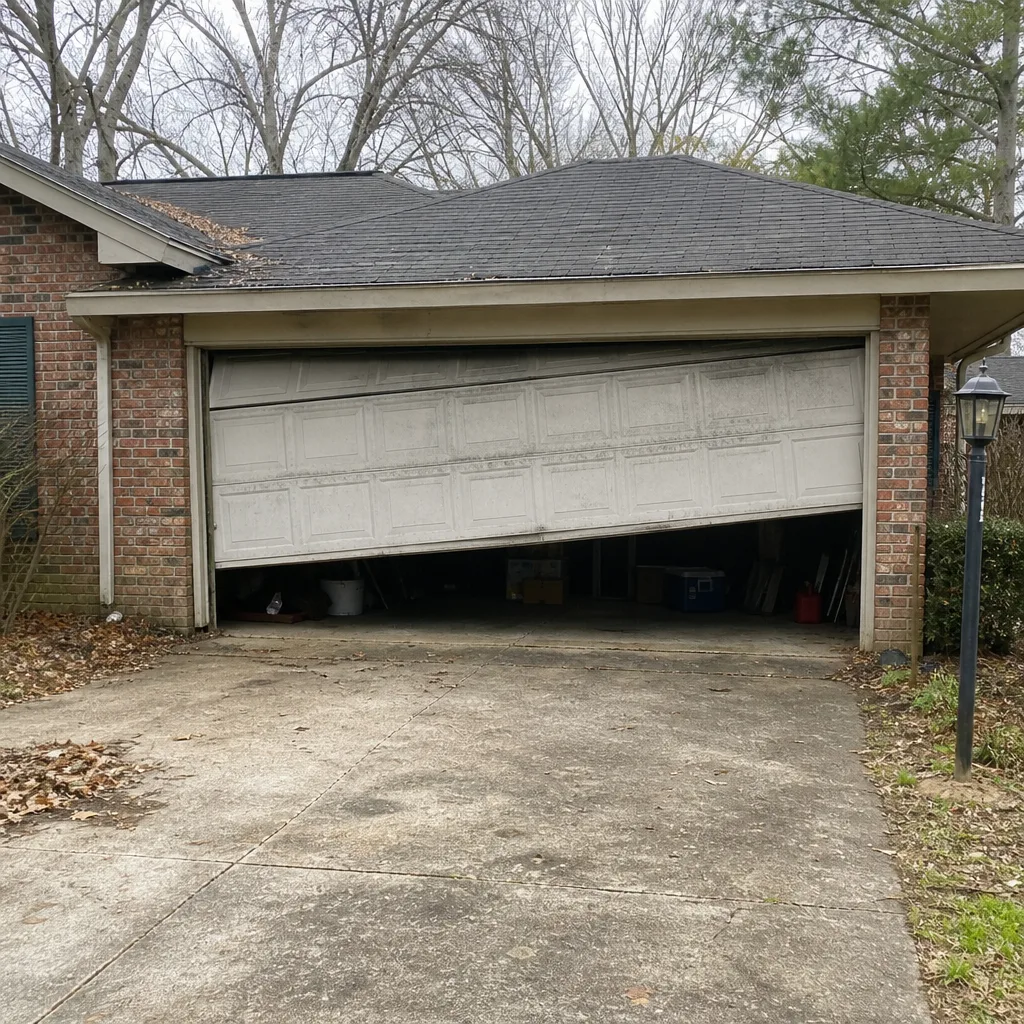
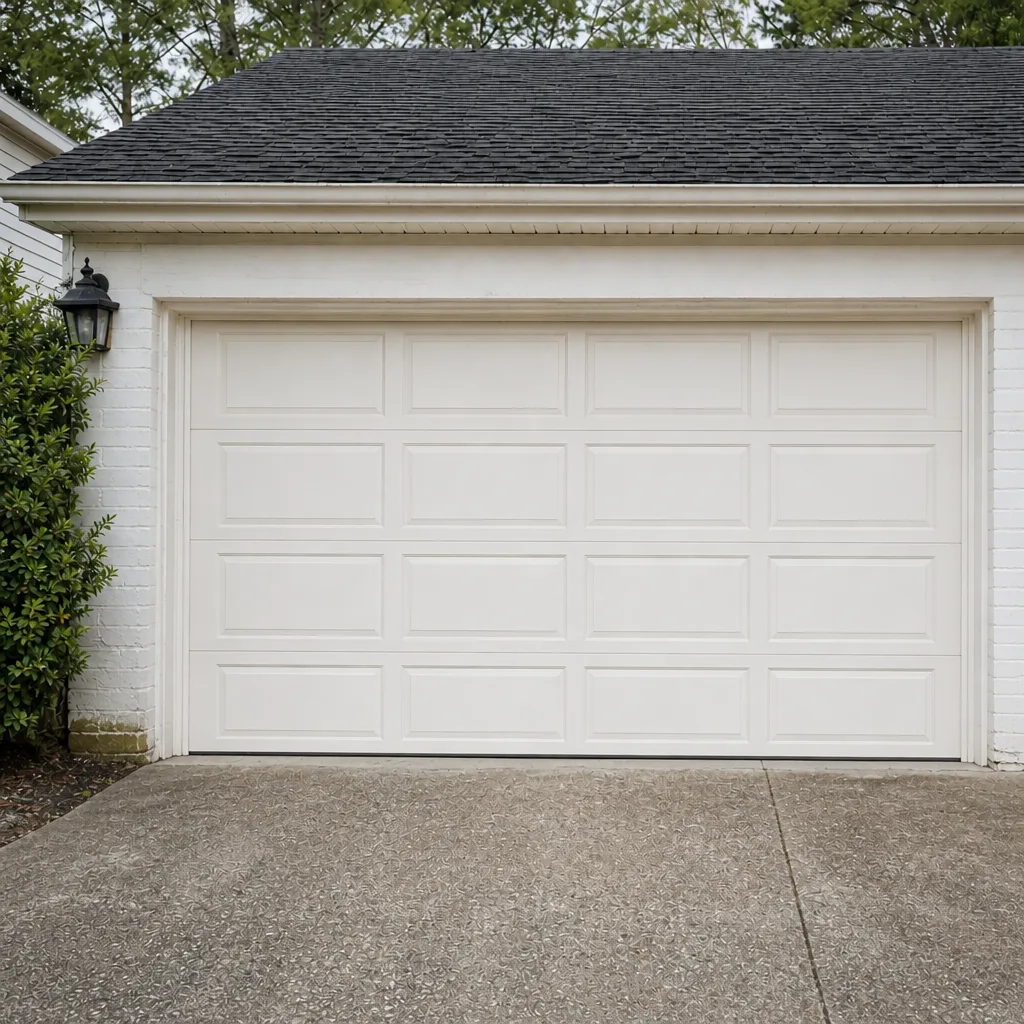
See the difference
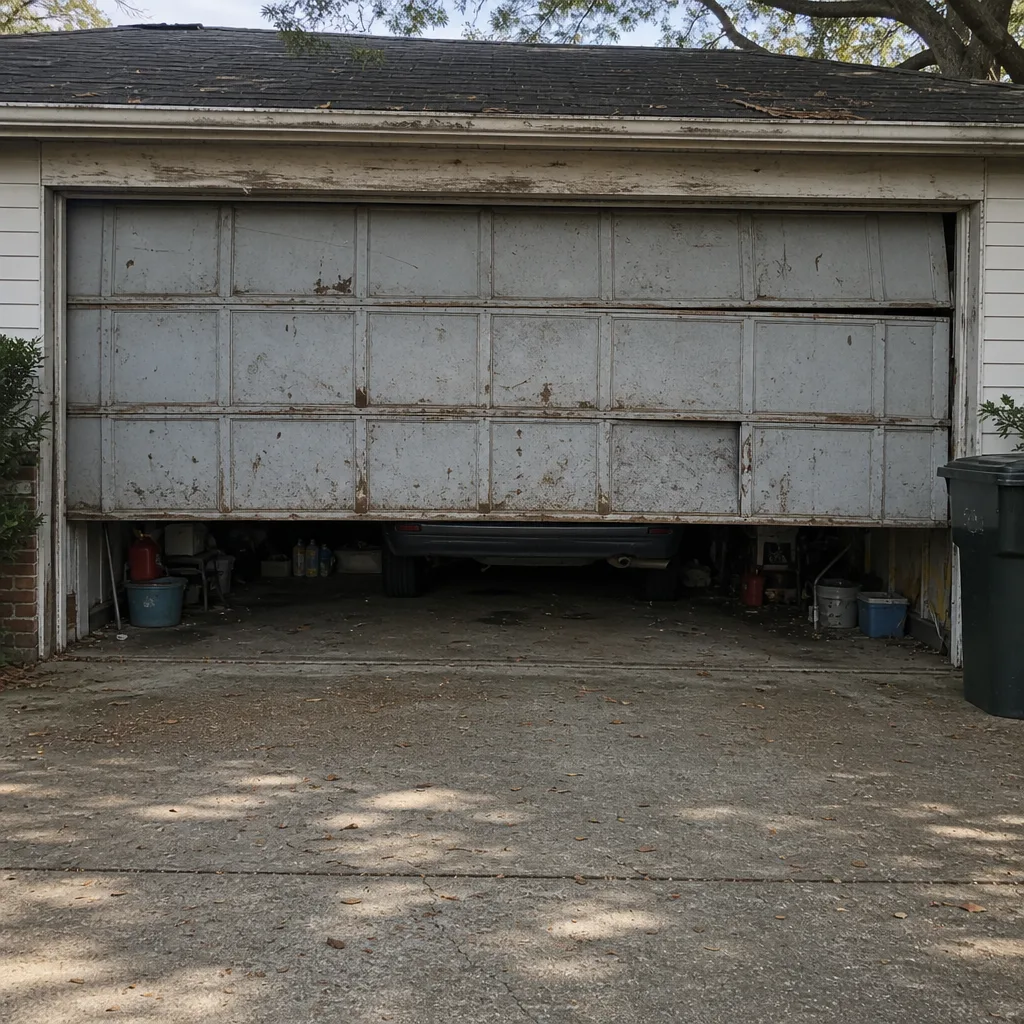 Before
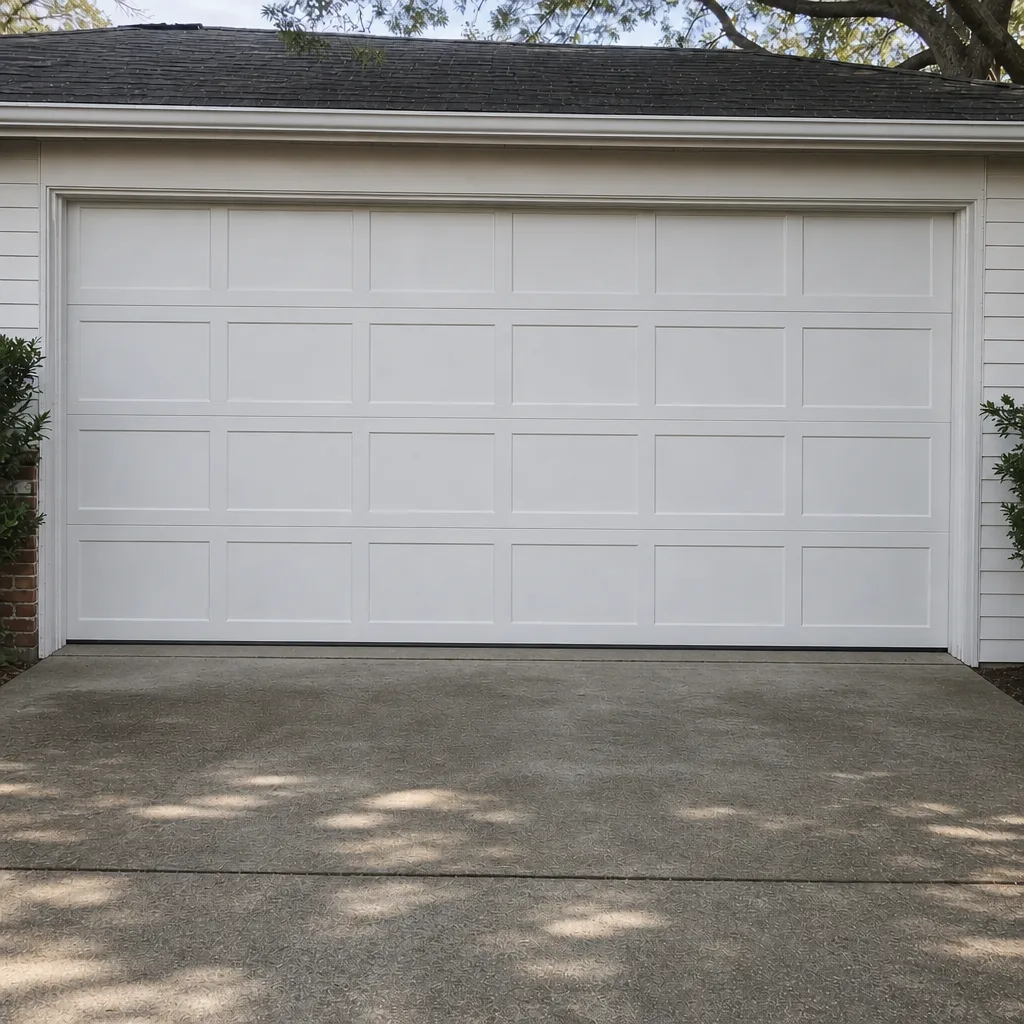 After
 Before
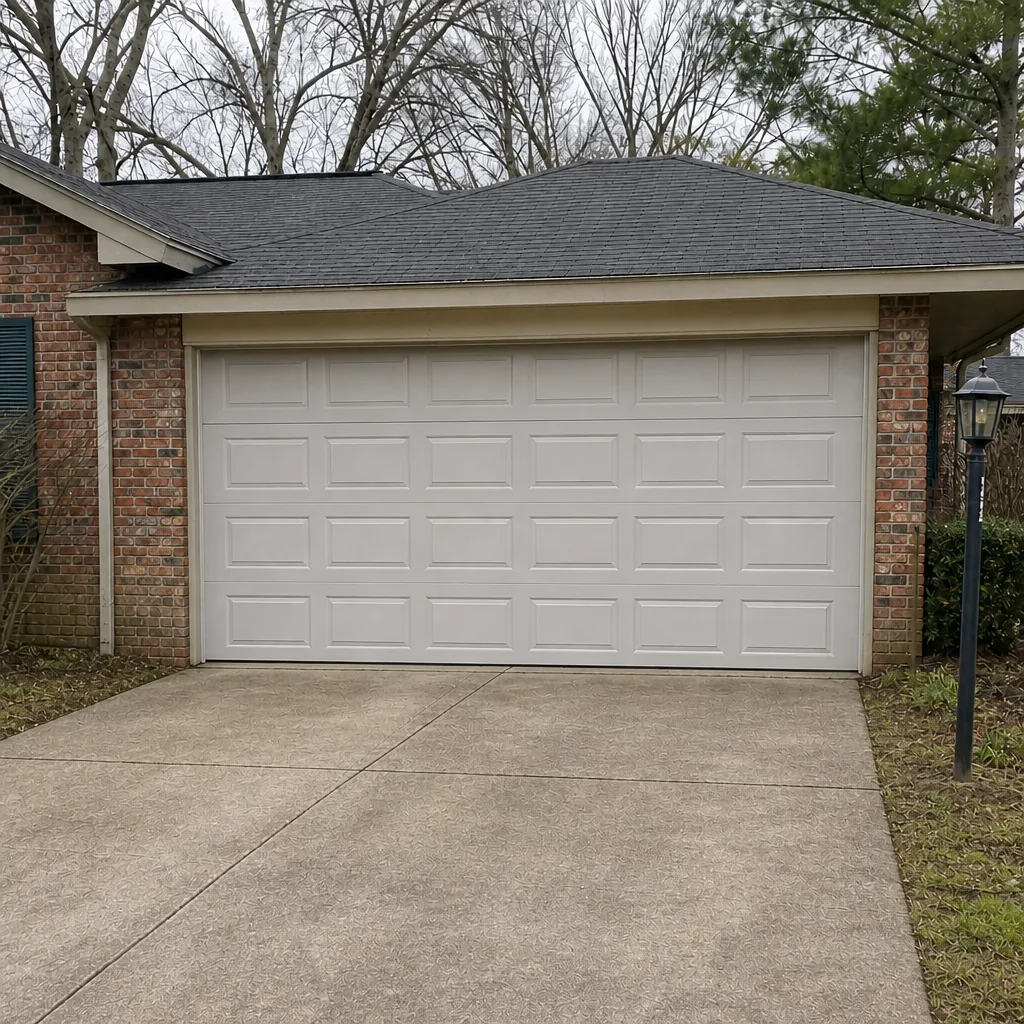 After
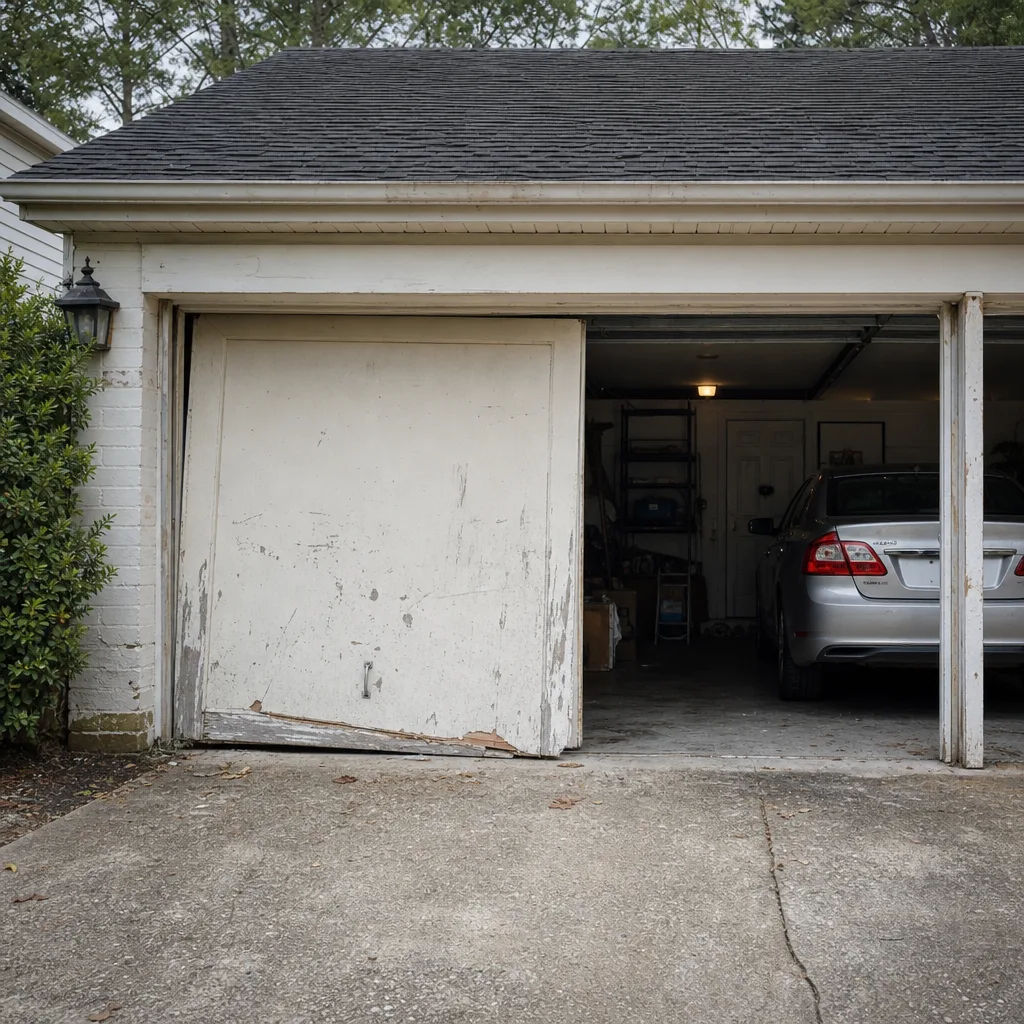 Before
 After
When to Call a Professional
Some problems are safe to investigate yourself, and some aren’t. Call a professional when:
- The door is heavy to lift by hand or won’t stay up at the halfway point
- A torsion or extension spring has visibly broken
- A cable is hanging loose, frayed, or kinked
- The door is off track or hanging at an angle
- The door reverses mid-travel and the sensors are clean and aligned
- You see scorched wiring, smoke, or smell burning near the opener
- The door won’t close at all and the reason isn’t obvious
If you’re in any of these situations, keep the door closed, disengage the opener if the door is already up, and don’t try to force the door. The right next step is a phone call.
Lakeside Garage Door Service offers free estimates in Montgomery – call (888) 688-3641. We work on the brand already on your home, whether that’s a LiftMaster opener, a Clopay panel, or an Amarr or Wayne Dalton door. We handle the door assembly and the opener as one system, so a single call resolves the whole problem rather than passing you between specialists. Our technicians are state-licensed, insured and have up to 8 years of experience. We answer 24/7. Fast dispatch from 7am to 7pm.
Frequently Asked Questions
Most garage door repairs in Montgomery fall into predictable ranges based on what’s broken. A single broken spring is typically the most common repair, and a single spring replacement usually runs in the low-to-mid hundreds of dollars, with a matched pair usually replaced together at about twice a single spring. A tune-up or roller replacement typically runs lower. Opener repairs vary by component. The price is set per job by the written estimate, and you’ll know the number before any work begins. Call (888) 688-3641 for an exact quote – estimates are free.
Yes, same-day service is available for garage door repair in Montgomery. We answer 24/7. Fast dispatch from 7am to 7pm, Sunday through Friday. A call outside dispatch hours is booked into the next opening, Sunday through Friday, 7am to 7pm. Call (888) 688-3641 to get on the schedule.
Afternoon-only failures are almost always the safety sensors sitting in direct sunlight. The sun hitting one sensor lens confuses the beam and the opener refuses to close. Move the sensor bracket a quarter inch out of the sun’s path and the problem usually stops. If that doesn’t fix it, there could be a sensor wire issue. Call (888) 688-3641 if the sensor move doesn’t solve it – estimates are free.
No, the written estimate is the price. We quote before any work starts, so the number you agree to is the number you pay. If a problem turns out to be more involved than the description suggested, we’ll explain what we found and the new price before proceeding – never after. Call (888) 688-3641 for a free estimate.
Yes, the technicians are state-licensed and insured. Our technicians have up to 8 years of experience in garage door repair, opener repair and full installation. They work on your existing brand – Clopay, Amarr, Wayne Dalton and others – not a substitute. Call (888) 688-3641 for a free estimate.
No, and this is one of the more common mistakes. A new opener on a door with weakened springs works overtime and can fail early. Springs carry the weight of the door, and the opener guides the motion. If the springs are due for replacement, address those before – or alongside – the opener. We’re brand-familiar with LiftMaster, Chamberlain and Genie openers, so we can diagnose the actual cause rather than guess. Call (888) 688-3641 for a free estimate.
The Bottom Line
Most garage door problems in Montgomery trace back to one of four root causes: spring tension, track alignment, opener signal, or weather seal failure. The manual-open test is your quickest way to tell mechanical from electrical. Springs and cables are the dangerous territory – leave those to a trained technician. Tracks, rollers, seals, sensors and remotes are often safe to inspect and sometimes to fix yourself. Document the problem with photos and a short video before you call. It makes the quote accurate and shortens the visit. And remember that the climate in Montgomery drives predictable seasonal failures – springs break in the summer heat, seals fail over hot and humid months, and binding starts in the fall. If you’re at the point where the problem is beyond small fixes, a call is quicker than another afternoon of trying. Call (888) 688-3641 for a free estimate.
Written by the team at Lakeside Garage Door Service.